 ราจีนเทค
ปืนต่อต้านโดรนเพื่อการปกป้องโครงสร้างพื้นฐานที่สำคัญ: สิ่งที่ผู้ซื้อต้องรู้ก่อนจัดซื้อจัดจ้าง
อากาศยานไร้คนขับไม่ได้จำกัดอยู่เพียงการใช้งานด้านสันทนาการหรือเชิงพาณิชย์อีกต่อไป. ในช่วงไม่กี่ปีที่ผ่านมา, โดรนที่ไม่ได้รับอนุญาตและเป็นอันตรายกลายเป็นภัยคุกคามร้ายแรงต่อโครงสร้างพื้นฐานที่สำคัญ, รวมทั้งโรงไฟฟ้าด้วย, สนามบิน, สิ่งอำนวยความสะดวกด้านน้ำมันและก๊าซ, ศูนย์ข้อมูล, พอร์ต, และสถานที่ราชการ.
สำหรับองค์กรที่รับผิดชอบในการปกป้องทรัพย์สินที่มีมูลค่าสูงเหล่านี้, คำถามไม่มีอีกต่อไป ถ้า จำเป็นต้องมีความสามารถในการต่อต้านโดรน แต่โซลูชันใดที่ให้การป้องกันที่เชื่อถือได้, การปฏิบัติตามกฎหมาย, และประสิทธิภาพการดำเนินงาน.
ท่ามกลาง เทคโนโลยีต่อต้าน UAS ที่มีอยู่, ปืนต่อต้านโดรนกลายเป็นตัวเลือกที่ต้องการสำหรับผู้ใช้มืออาชีพหลายคนเนื่องจาก ความคล่องตัว, ความแม่นยำ, และความสามารถในการตอบสนองทันที. อย่างไรก็ตาม, การตัดสินใจจัดซื้อจัดจ้างต้องใช้มากกว่าความเข้าใจในระดับผิวเผิน.
คู่มือนี้จะอธิบาย สิ่งที่ผู้ซื้อต้องประเมินก่อนจัดหาปืนต่อต้านโดรนสำหรับการปกป้องโครงสร้างพื้นฐานที่สำคัญ, ช่วยให้ผู้มีอำนาจตัดสินใจหลีกเลี่ยงข้อผิดพลาดที่มีค่าใช้จ่ายสูง และเลือกโซลูชันที่ทำงานในสภาพแวดล้อมจริง.
Why Critical Infrastructure Is a Prime Target for Drone Threats
ไซต์โครงสร้างพื้นฐานที่สำคัญนำเสนอโปรไฟล์ความเสี่ยงที่ไม่เหมือนใคร:
รอยเท้าทางกายภาพขนาดใหญ่และขอบเขตเปิด
ทรัพย์สินที่มีมูลค่าสูงหรือเป็นอันตราย
การดำเนินงานต่อเนื่องโดยไม่มีการทนต่อการหยุดชะงัก
ข้อกำหนดด้านกฎระเบียบและความปลอดภัยที่เข้มงวด
สามารถใช้โดรนที่ไม่ได้รับอนุญาตได้ การเฝ้าระวัง, การลักลอบขนของ, สัญญาณรบกวน, หรือการโจมตีทางกายภาพ, ทำให้เกิดการหยุดทำงานของการปฏิบัติงาน, อันตรายด้านความปลอดภัย, และความเสียหายต่อชื่อเสียง.
มาตรการรักษาความปลอดภัยแบบดั้งเดิม—การฟันดาบ, กล้อง, เรดาร์, และการลาดตระเวนไม่ได้ออกแบบมาเพื่อตรวจจับหรือลดระดับความสูงต่ำ, ภัยคุกคามทางอากาศที่เคลื่อนไหวช้า. ช่องว่างนี้ได้ผลักดันให้มีการยอมรับเพิ่มมากขึ้น anti drone gun systems as part of layered defense strategies.
What Is an Anti Drone Gun and How Does It Work?
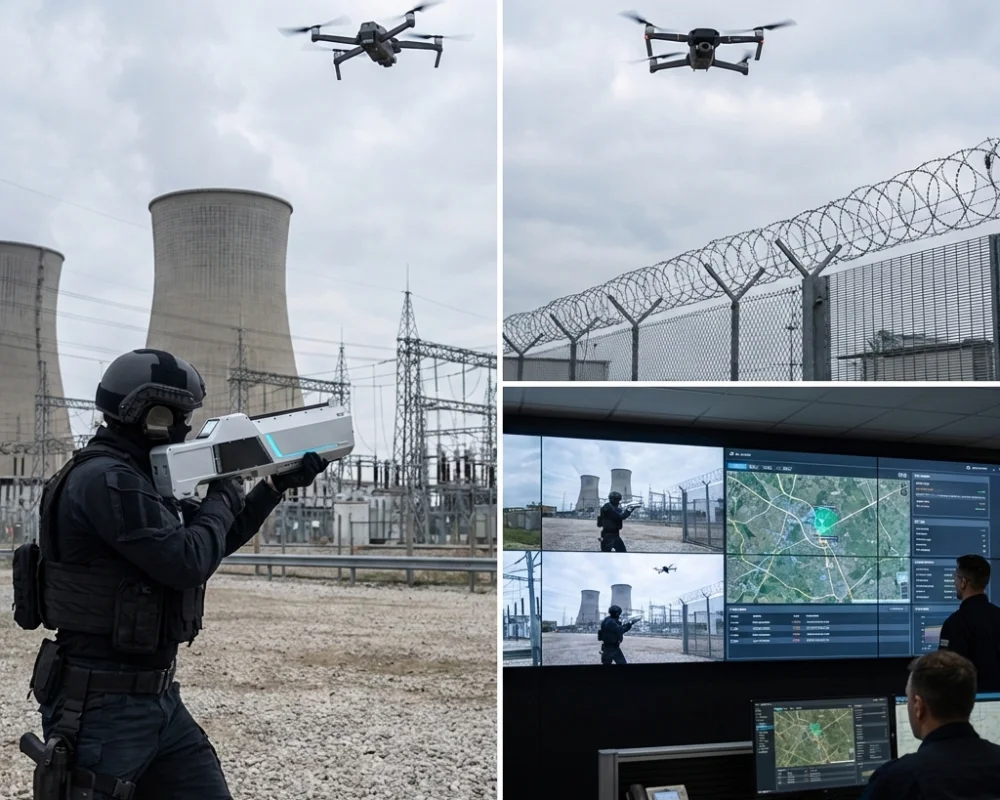
หนึ่ง anti drone gun is a แบบพกพา, directional counter-drone device designed to disrupt a drone’s communication and navigation systems using targeted electromagnetic interference.
Unlike wide-area jamming systems, an anti drone gun allows operators to:
Visually identify a threat
Aim at a specific drone
Neutralize it with controlled RF interference
Typical disruption methods include:
Control link jamming (disconnects drone from operator)
GNSS/GPS interference (forces hover, landing, or return)
Multi-band coverage for commercial and modified drones
This controlled approach is particularly valuable in critical infrastructure environments, where precision and safety are essential.
Key Advantages of Using an Anti Drone Gun for Critical Infrastructure
1. Precision Engagement in Sensitive Environments
Critical infrastructure sites often operate near populated areas, aircraft corridors, or other RF-sensitive systems. An anti drone gun provides directional and limited-area interference, reducing the risk of collateral impact on authorized communications.
2. Rapid Response Without Fixed Installation
Unlike fixed jammers or kinetic systems, anti drone guns:
Require no permanent infrastructure
Can be deployed immediately by trained personnel
Are suitable for temporary or evolving threat scenarios
This makes them ideal for power substations, mobile command units, พอร์ต, and remote facilities.
3. Cost-Effective Counter-Drone Capability
From a procurement perspective, an anti drone gun typically offers:
Lower upfront investment compared to integrated C-UAS platforms
Minimal installation costs
Reduced maintenance requirements
For organizations seeking high ROI without overengineering their defense system, this is a critical advantage.
Critical Technical Factors Buyers Must Evaluate
Not all anti drone gun solutions are equal. Before procurement, buyers should evaluate the following criteria carefully:
Frequency Coverage
Ensure the anti drone gun supports multi-band frequencies, commonly including:
ISM bands (2.4 กิกะเฮิรตซ์, 5.8 กิกะเฮิรตซ์)
GNSS bands (จีพีเอส, โกลนาส, กาลิเลโอ, BeiDou)
Optional extended bands for customized drones
Limited frequency coverage may leave gaps exploitable by modified UAVs.
Effective Range and Directionality
For critical infrastructure, effective engagement distance is essential. Buyers should assess:
Maximum operational range under real-world conditions
Beam width and targeting precision
Performance in high-interference environments
Manufacturer claims should be validated with field-tested data, not laboratory figures alone. For critical infrastructure protection, buyers should prioritize full-frequency coverage, enabling detection and neutralization of both commercial and modified drones operating across WiFi, cellular, and GNSS bands.
Power Management and Endurance
Operational continuity matters. Key questions include:
Battery life under continuous use
Hot-swappable battery options
Charging time and logistics support
In emergency scenarios, equipment downtime is unacceptable.
Ergonomics and Operator Training
Security personnel may need to deploy the device under stress. A professional anti drone gun should feature:
Balanced weight and ergonomic design
Intuitive user interface
Minimal training requirements
Ease of use directly impacts response speed and effectiveness.
Legal and Regulatory Considerations
One of the most overlooked aspects of anti drone gun procurement is legality status and regulatory compliance.
RF jamming technologies are subject to strict controls in many jurisdictions. Buyers must ensure:
The solution complies with local spectrum regulations
Deployment is restricted to authorized entities
Usage protocols are clearly documented
For government agencies and infrastructure operators, working with experienced suppliers who understand export controls and regulatory frameworks is essential.
Integration into a Layered Counter-Drone Strategy
While effective on its own, an anti drone gun performs best as part of a layered defense architecture, working alongside:
Drone detection sensors (เครื่องสแกนคลื่นความถี่วิทยุ, เรดาร์, อีโอ/อินฟราเรด)
Command and control platforms
Physical security and access control systems
In this role, the anti drone jammer becomes the last-line neutralization tool, enabling precise response after detection and identification.
What Professional Buyers Look for in a Supplier
Beyond technical specifications, procurement teams should assess the trustworthy supplier based on:
Proven experience in critical infrastructure projects
Ability to support customization and frequency adaptation
Technical documentation and after-sales support
Export experience and compliance capability
For B2B buyers, supplier reliability is as important as product performance.
Final Thoughts: Making an Informed Anti Drone Gun Procurement Decision
Protecting critical infrastructure against drone threats requires practical, เป็นไปตามข้อกำหนด, and scalable solutions. The anti drone gun has earned its place as a trusted tool for professional users—but only when selected with a clear understanding of operational requirements and risk environments.
By evaluating technical performance, regulatory compliance, integration capability, and supplier credibility, buyers can ensure their investment delivers real-world protection—not just theoretical capability.