 RagineTech
Introducción a la tecnología Drone Swarm y los riesgos de seguridad
La tecnología de enjambre de drones representa un cambio fundamental en la forma en que se implementan y gestionan los sistemas aéreos no tripulados. Comprender su lógica operativa y los riesgos de seguridad asociados es esencial para evaluar por qué las medidas tradicionales de defensa a baja altitud son cada vez más inadecuadas cuando se enfrentan amenazas coordinadas basadas en enjambres..
¿Qué es un enjambre de drones??
La tecnología de enjambre de drones es una aplicación distribuida de vehículos aéreos no tripulados (UAV) que imita el comportamiento colectivo de enjambres naturales como abejas o pájaros. A través de comunicación entre drones y algoritmos colaborativos., Varios drones pueden compartir información., coordinar tareas, y ejecutar misiones como un sistema integrado en lugar de plataformas aisladas.
En qué se diferencian los enjambres de drones de las operaciones de vehículos aéreos no tripulados individuales?
A diferencia de las operaciones tradicionales con un solo dron, Los enjambres de drones enfatizan la descentralización, redundancia, y cooperación. Cada dron funciona como un nodo dentro de una red, permitiendo el intercambio de datos en tiempo real, planificación de ruta adaptativa, y toma de decisiones coordinada. Esto mejora significativamente la flexibilidad operativa., eficiencia de la misión, y resiliencia frente a fallos parciales del sistema.
Por qué los enjambres de drones plantean un nuevo desafío de seguridad a baja altitud?
Mientras que los enjambres de drones aportan eficiencia y escalabilidad a aplicaciones civiles y militares, Su rápido desarrollo ha introducido graves riesgos de seguridad.. Incidentes que involucran enjambres de drones que interrumpen las operaciones del aeropuerto, realizar vigilancia no autorizada, y el robo de información confidencial ya han ocurrido en todo el mundo. En comparación con amenazas de vehículos aéreos no tripulados individuales, ataques de enjambre caracterizados por un gran número, alta velocidad, y una fuerte coordinación presentan desafíos sin precedentes para los sistemas tradicionales de seguridad y defensa aérea a baja altitud..
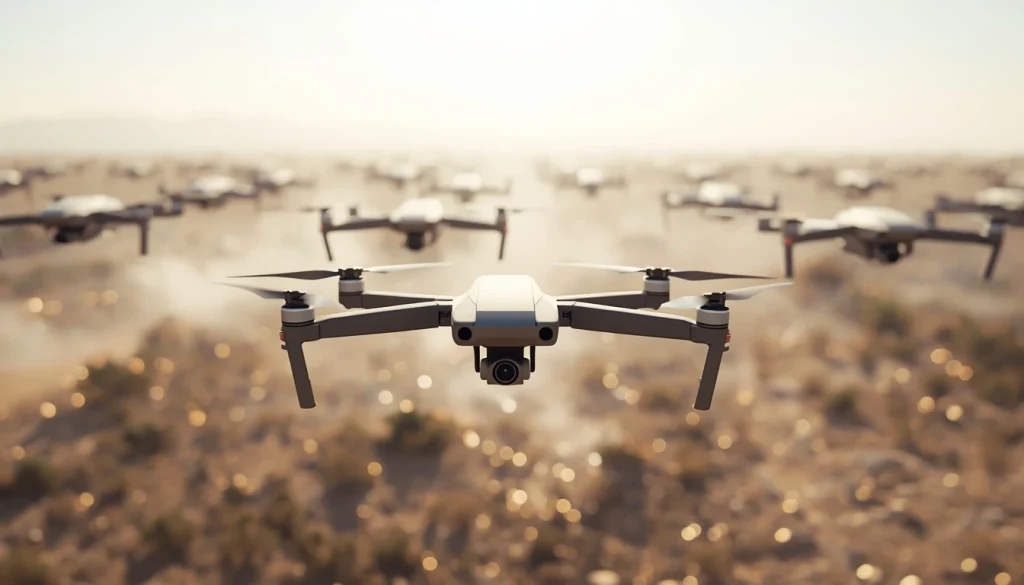
Enjambre de drones
Características clave de las amenazas de los ataques de enjambres de drones
Los ataques con enjambres de drones difieren significativamente de las amenazas de vehículos aéreos no tripulados convencionales debido a su escala, coordinación, y adaptabilidad. Analizando las principales características de amenaza de los enjambres de drones, Los planificadores de seguridad pueden evaluar mejor los niveles de riesgo y diseñar contramedidas adaptadas a escenarios de ataques basados en enjambres..
Ataques multidireccionales repentinos y sigilosos
Los drones individuales dentro de un enjambre suelen ser de tamaño pequeño y tienen secciones transversales de radar extremadamente bajas., a veces tan bajo como 0.01 metros cuadrados. Volar a baja o muy baja altitud, Pueden aprovechar el enmascaramiento del terreno para acercarse encubiertamente a los objetivos.. Los enjambres de drones pueden lanzar ataques simultáneos desde múltiples direcciones, hacer que el tiempo y los vectores de ataque sean altamente impredecibles y dejar a los defensores con ventanas mínimas de alerta temprana.
Ataques masivos coordinados y potencial destructivo
Aunque la capacidad de carga útil de un solo dron es limitada, La ventaja numérica de un enjambre y su capacidad de ataque coordinado pueden provocar daños significativos.. Los enjambres de drones pueden transportar explosivos, dispositivos incendiarios, u otras cargas útiles para atacar infraestructuras críticas como subestaciones eléctricas, estaciones base de comunicación, y centros de transporte. Los golpes de precisión en componentes clave como transformadores o disyuntores pueden causar interrupciones generalizadas del servicio e impactos sociales en cascada..
Interferencia de información, Reconocimiento, y robo de datos
Los enjambres de drones también poseen fuertes capacidades de guerra de información.. Mediante el despliegue de equipos de interferencia electrónica, pueden interferir con las redes de comunicación, sistemas de radar, e infraestructura de navegación, potencialmente haciéndolos inoperables. En paralelo, Los sensores integrados, como cámaras y receptores de señales, permiten la recopilación de datos a gran escala.. En contextos militares, esto apoya la recopilación de inteligencia en el campo de batalla; en entornos civiles, plantea serias preocupaciones con respecto al espionaje industrial y la seguridad de los datos personales.
Por qué los enjambres de drones son difíciles de detectar, Pista, e interceptar?
La gran cantidad de objetivos y el alto grado de coordinación dentro de los enjambres de drones abruman los sistemas de defensa tradicionales.. Los misiles de defensa aérea de alto coste son económicamente insostenibles frente a los drones de bajo coste, mientras que su velocidad de reacción y capacidad de interceptación son a menudo insuficientes. Además, Los enjambres de drones pueden reconfigurar dinámicamente sus formaciones y tácticas en respuesta a las contramedidas., complicando aún más el seguimiento continuo y la interceptación sostenida.
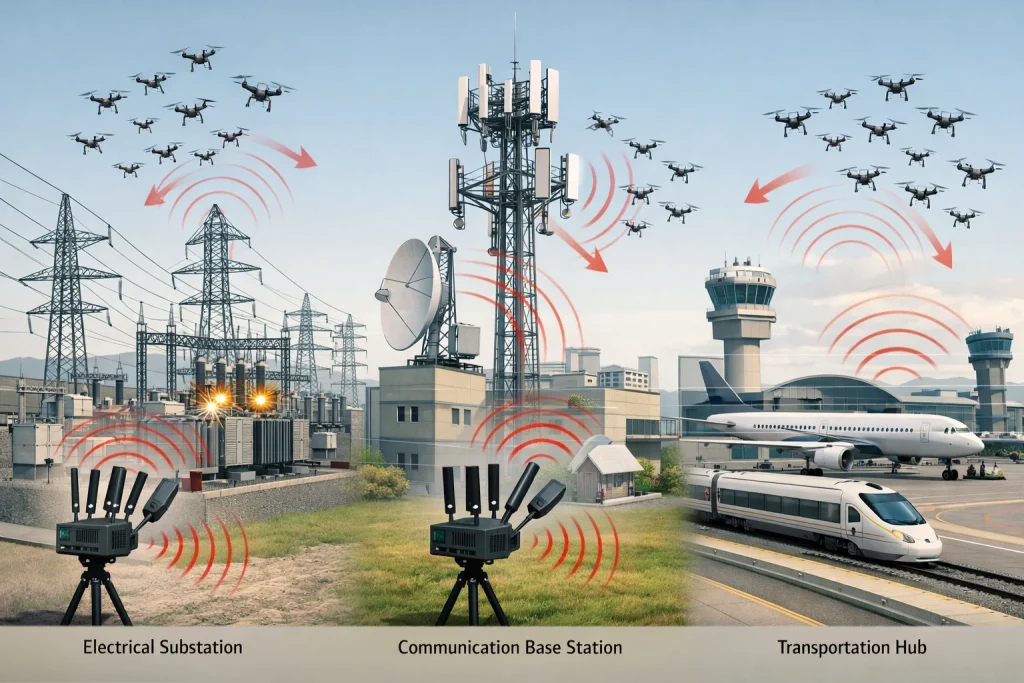
Por qué los sistemas tradicionales de contradrones luchan contra los enjambres
La mayoría de los sistemas antidrones existentes se diseñaron originalmente para abordar intrusiones aisladas o de baja densidad de vehículos aéreos no tripulados.. Cuando nos enfrentamos a grandes problemas, enjambres coordinados de drones, Estos sistemas revelan limitaciones estructurales y económicas que reducen significativamente su eficacia defensiva..
Limitaciones de los sistemas de detección de un solo objetivo
Los sistemas convencionales contra drones están diseñados principalmente para detectar y atacar vehículos aéreos no tripulados individuales.. En escenarios de enjambre, Estos sistemas luchan por mantener un seguimiento estable a través de múltiples altitudes bajas., movimiento lento, y objetivos muy espaciados, lo que genera lagunas en la detección y retrasos en las respuestas.
Desequilibrio de costos entre drones y defensa aérea convencional
La asimetría económica entre los enjambres de drones y las soluciones tradicionales de defensa aérea es marcada. Un solo misil interceptor puede costar cientos de miles de dólares, mientras que los drones individuales en un enjambre pueden costar sólo unos pocos cientos de dólares. Este desequilibrio hace que las estrategias de interceptación cinética convencionales no sean prácticas para amenazas de enjambres a gran escala..
Problemas de velocidad de reacción y saturación
Los enjambres de drones pueden saturar los sistemas de detección e interceptación por su gran número. Incluso cuando algunos drones son neutralizados, otros pueden adaptar sus rutas y continuar la misión, Reducir las tasas generales de éxito de interceptación en escenarios simulados y del mundo real..
Tecnologías de detección para sistemas de enjambre contra drones
La defensa efectiva contra enjambres de drones comienza con Detección fiable y alerta temprana.. Detección de múltiples baja altitud, baja velocidad, y pequeños vehículos aéreos no tripulados simultáneamente requiere la integración de tecnologías de detección complementarias capaces de operar en condiciones electromagnéticas y ambientales complejas.
Detección de radar para enjambres de drones
El radar sigue siendo un método de detección fundamental en los sistemas contra drones. Múltiples entradas y múltiples salidas. (MIMO) El radar mejora la detección de bajas altitudes., baja velocidad, y objetivos pequeños mediante la transmisión de múltiples señales ortogonales. Radar de apertura sintética (RAE) Además, permite obtener imágenes y rastrear la trayectoria de enjambres de drones en distancias extendidas.. Sin embargo, El rendimiento del radar puede degradarse en entornos electromagnéticos complejos., Requiriendo algoritmos antiinterferencias avanzados y técnicas de procesamiento de señales..
Tecnologías de detección electroóptica e infrarroja
La detección electroóptica combina la detección de luz visible e infrarroja para identificar enjambres de drones. Los sensores infrarrojos detectan emisiones térmicas de motores y sistemas de energía., ofreciendo alta sensibilidad en entornos de baja altitud. Cámaras de luz visible, cuando se integra con algoritmos de reconocimiento de imágenes basados en inteligencia artificial, Puede clasificar tipos de drones y rastrear rutas de vuelo en tiempo real.. Condiciones climáticas adversas como niebla., lluvia, o la baja visibilidad siguen siendo una limitación clave, impulsando la necesidad de tecnologías adaptativas de mejora de imágenes.
Leer más: Electro-óptico & Sistemas de detección acústica para la defensa de enjambres de drones
Detección acústica de enjambres de drones a baja altitud
Los sistemas de detección acústica utilizan conjuntos de micrófonos para capturar firmas de ruido de drones en frecuencias específicas.. Aplicando algoritmos de procesamiento de señales., Estos sistemas pueden estimar la posición de los drones., velocidad, y cantidad. La detección acústica es particularmente eficaz en entornos urbanos o de terreno complejo., aunque la interferencia del ruido ambiental sigue siendo un desafío importante que requiere mejoras continuas en el filtrado de ruido y la extracción de características..
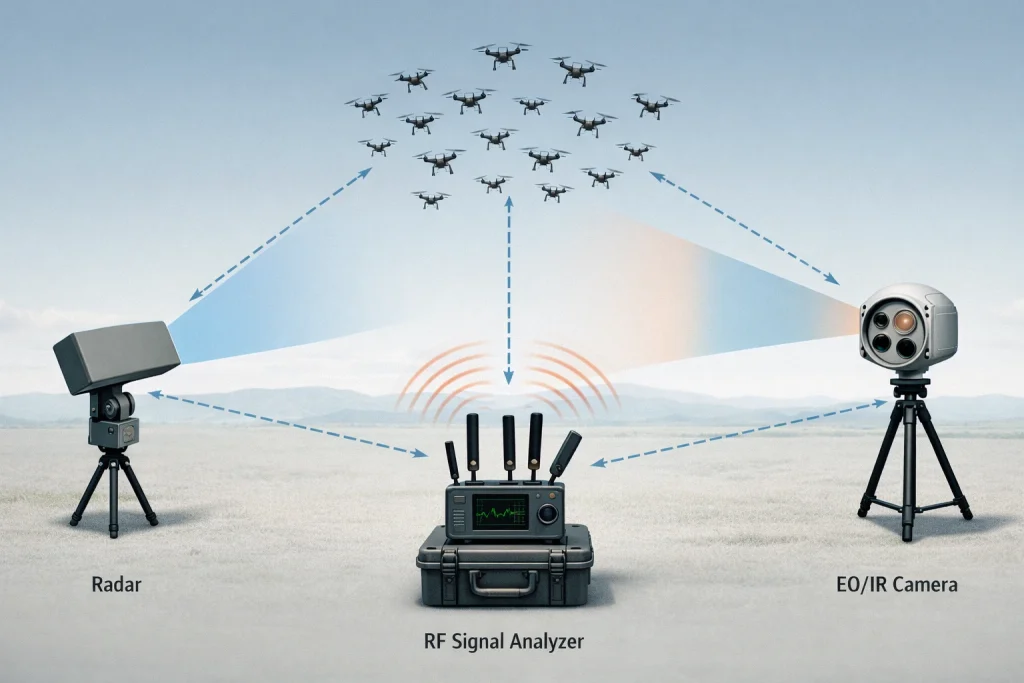
Comparación de interferencias de radar RF GPS para tecnologías antidrones
Tecnologías de interferencia utilizadas contra enjambres de drones
Las tecnologías de interferencia forman un componente central de la defensa activa contra enjambres de drones al interrumpir la comunicación., navegación, y capacidades de detección. Los diferentes enfoques de interferencia ofrecen distintas ventajas según la distancia de participación, limitaciones ambientales, y la magnitud de la amenaza del enjambre de drones.
Radiofrecuencia (RF) Tecnología de interferencia
La interferencia de RF interrumpe los enlaces de comunicación de los drones y los canales de control al transmitir señales de interferencia en frecuencias específicas.. Los dispositivos de interferencia de RF direccionales pueden apuntar con precisión a drones individuales a distancias cortas, mientras que los sistemas montados en vehículos brindan una cobertura más amplia capaz de interferir con múltiples drones simultáneamente. A medida que evolucionan las capacidades antiinterferencias de los drones, Las estrategias de interferencia de RF deben adaptarse continuamente mediante una gestión de frecuencia y una asignación de energía optimizadas..
Interrupción del GPS e interrupción de la navegación
La interferencia del GPS interfiere con las señales de navegación por satélite al emitir interferencias electromagnéticas de alta potencia en las mismas frecuencias.. Cuando los receptores de drones se ven abrumados por señales de interferencia, pueden perder un posicionamiento preciso, momento, y datos de velocidad, lo que lleva a la desorientación o al fracaso de la misión. Los bloqueadores de GPS portátiles son adecuados para corto alcance., escenarios de respuesta rápida, mientras que los sistemas fijos pueden crear zonas protectoras de gran superficie alrededor de los aeropuertos, bases militares, y otras instalaciones críticas.
Interferencia láser y supresión electroóptica
La interferencia láser utiliza rayos de alta energía para cegar o dañar los sensores ópticos de los drones, degradar sus capacidades de navegación y ejecución de misiones. Este método ofrece alta precisión., respuesta rápida, y mínimo impacto electromagnético en los sistemas circundantes. Sin embargo, La eficacia del láser depende en gran medida de las condiciones climáticas., Requiriendo mecanismos adaptativos de emisión y seguimiento para mitigar la atenuación atmosférica..
Tecnologías de control de enjambres para contramedidas coordinadas
A medida que los enjambres de drones se vuelven más autónomos y coordinados, Las contramedidas deben ir más allá de la supresión de objetivos individuales.. Las tecnologías de control de enjambres se centran en influir o alterar el comportamiento colectivo., permitiendo a los defensores neutralizar múltiples drones mediante una intervención sistémica.
¿Qué es el control de enjambres en los sistemas contra drones??
La tecnología de control de enjambres se centra en alterar la lógica colaborativa y los mecanismos de toma de decisiones de los enjambres de drones en lugar de apuntar a plataformas individuales.. Al interferir con las redes de comunicación de enjambres y los algoritmos de coordinación., Los defensores pueden suprimir, fragmento, o neutralizar múltiples drones simultáneamente.
Interrupción de la comunicación enjambre e interrupción de la red
Este enfoque apunta a los protocolos de comunicación que permiten la coordinación del enjambre.. Emitiendo señales de interferencia personalizadas o interferencias específicas del protocolo, las formaciones de enjambres pueden ser desestabilizadas, reduciendo su efectividad operativa. Se requiere una adaptación continua a medida que los protocolos de comunicación de enjambre se vuelven más cifrados y sofisticados.
Interferencias engañosas e inyección de comandos falsos
La interferencia engañosa engaña a los enjambres de drones al inyectar datos de navegación o comandos de control falsos. Esto puede hacer que los drones se desvíen de los caminos previstos., identificar erróneamente objetivos, o regresar a ubicaciones incorrectas. Una implementación exitosa requiere un conocimiento profundo de los algoritmos de control de enjambres y monitoreo en tiempo real para ajustar dinámicamente las señales engañosas..
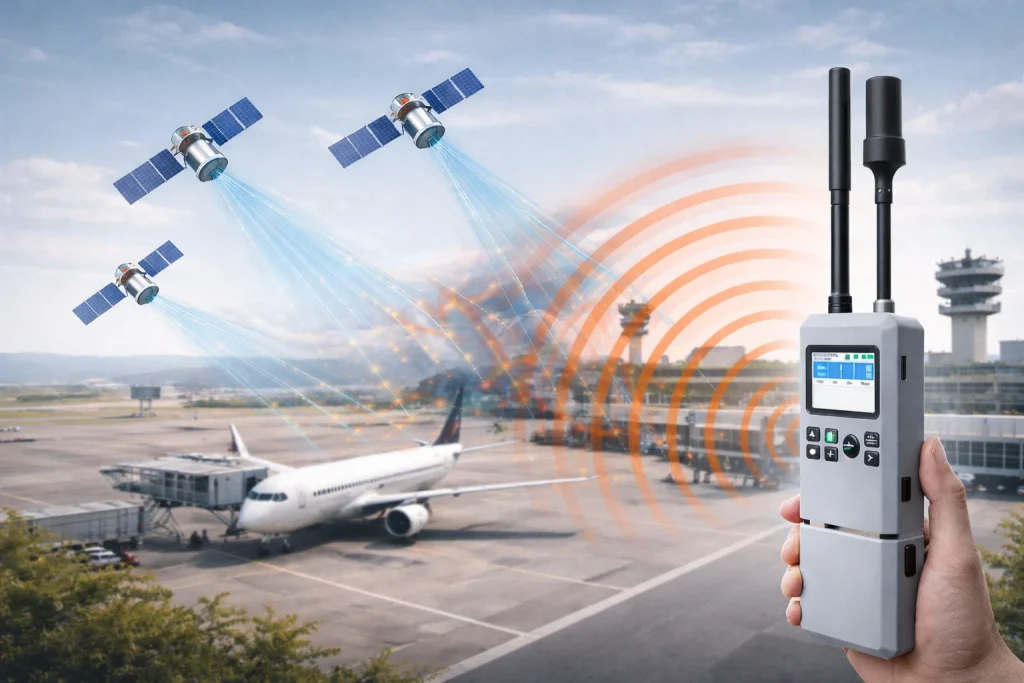
Sistemas inteligentes contra enjambres de drones y defensa basada en IA
La inteligencia artificial introduce un nuevo nivel de adaptabilidad y automatización a las operaciones contra enjambres de drones. Aprovechando el análisis basado en datos y los algoritmos predictivos, Los sistemas de defensa inteligentes pueden responder más eficazmente a amenazas de enjambres dinámicas y en rápida evolución..
Reconocimiento de amenazas y análisis de comportamiento impulsados por IA
La inteligencia artificial permite el seguimiento y análisis en tiempo real del comportamiento de los enjambres de drones. Los algoritmos de aprendizaje automático pueden identificar patrones de ataque, predecir las intenciones del enjambre, y proporcionar alertas tempranas antes de que se ejecuten acciones coordinadas.
Defensa predictiva y asignación automatizada de contramedidas
Los sistemas inteligentes contra drones pueden asignar automáticamente la detección, interferencia, y recursos de interceptación basados en evaluaciones de amenazas en tiempo real. Esto mejora la velocidad de respuesta y la eficiencia operativa en entornos complejos y en rápida evolución..
Desafíos de los datos, Algoritmos, y seguridad del sistema
A pesar de sus ventajas, Las contramedidas basadas en IA requieren grandes volúmenes de datos de entrenamiento de alta calidad y recursos informáticos sólidos.. También enfrentan riesgos relacionados con la suplantación de algoritmos y ataques adversarios., lo que requiere mejoras continuas en la seguridad y solidez del sistema.
Casos de uso y soluciones integradas de defensa contra enjambres de drones
En implementaciones del mundo real, La eficacia contra el enjambre de drones depende de qué tan bien se detecte, interferencia, y las tecnologías de control se integran en soluciones de defensa cohesivas. Los diferentes entornos operativos requieren arquitecturas de sistemas y estrategias de implementación personalizadas.
Protección de aeropuertos e infraestructura crítica
Sistemas integrados contra drones que combinan radar, sensores electroópticos, y las tecnologías de interferencia son esenciales para protegiendo los aeropuertos, instalaciones de energía, y centros de comunicación frente a intrusiones y ataques de enjambres de drones.
Bases militares e instalaciones de defensa sensibles
En entornos militares, Las defensas inteligentes y en capas contra enjambres de drones brindan alerta temprana, represión coordinada, y protección sostenida contra ataques de enjambres a gran escala.
Eventos a gran escala y escenarios de seguridad urbana
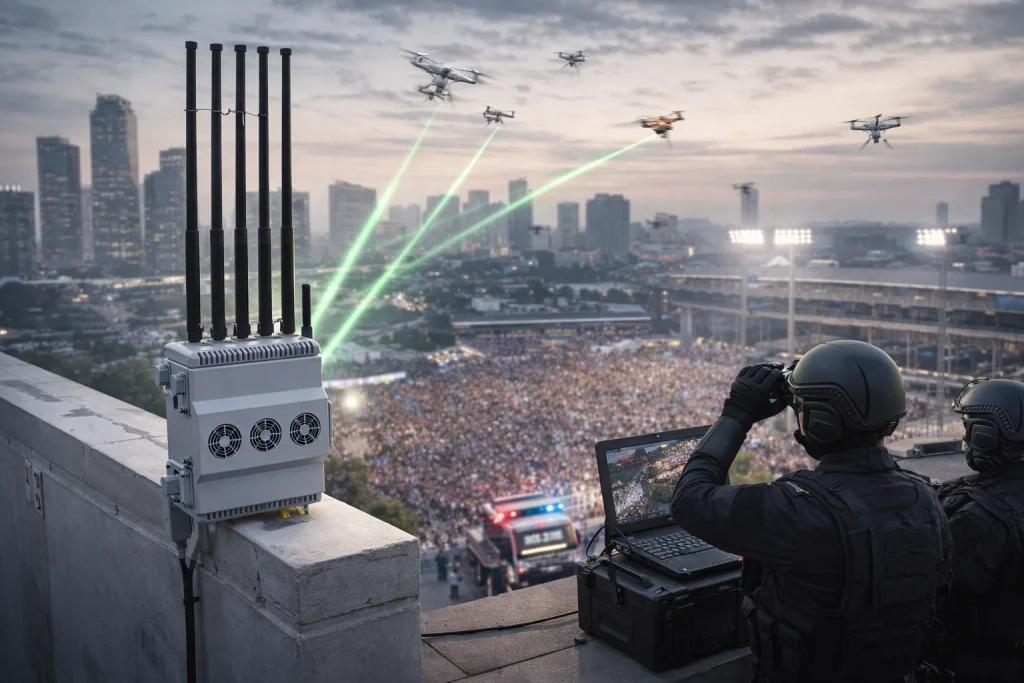
Para grandes eventos públicos y zonas urbanas, Las soluciones móviles y flexibles contra drones permiten un despliegue rápido y protección localizada contra enjambres de drones no autorizados..
Tendencias futuras en amenazas de enjambres de drones y tecnologías contra drones
La evolución tecnológica de los enjambres de drones y sus contramedidas continúa. Anticipar patrones de amenazas futuros y requisitos de defensa es fundamental para mantener la eficacia de la seguridad a largo plazo tanto en el ámbito civil como militar..
Aumento de la autonomía y la inteligencia de los enjambres de drones
Los avances en el control autónomo y la inteligencia artificial mejorarán aún más la adaptabilidad y coordinación de los enjambres de drones., aumentando la complejidad de las amenazas asociadas.
Evolución hacia la defensa multicapa y sistema de sistemas
Las futuras estrategias contra los drones dependerán cada vez más de múltiples capas., sistemas integrados que combinan la detección, interferencia, engaño, y control inteligente en diferentes dominios operativos.
Implicaciones regulatorias y de seguridad
A medida que se expanden las capacidades de los enjambres de drones, Los marcos regulatorios y las políticas de seguridad deben evolucionar para abordar los riesgos emergentes y al mismo tiempo respaldar aplicaciones legítimas..
Conclusión: construcción de una defensa eficaz contra las amenazas de enjambres de drones
Las amenazas de enjambres de drones representan un desafío persistente y en evolución para la seguridad a baja altitud. Reunir el análisis técnico y las estrategias de defensa discutidas anteriormente proporciona una base para la toma de decisiones informadas y la planificación a largo plazo contra los drones..
Por qué es esencial la defensa multisensor y multicapa
Las amenazas de enjambres de drones no se pueden mitigar eficazmente mediante soluciones de un solo punto. Fusión multisensor y arquitecturas de defensa en capas son fundamentales para lograr una detección confiable, respuesta oportuna, y protección sostenida.
Conclusiones clave para los responsables de la toma de decisiones en materia de seguridad y defensa
Para abordar los crecientes riesgos que plantean los enjambres de drones, las partes interesadas deben invertir en, inteligente, y tecnologías adaptables contra enjambres de drones que equilibran la efectividad, rentabilidad, y flexibilidad operativa.